
Why NIST Updated the Framework
Cyber threats don’t stay the same. Attackers adapt, technologies change, and businesses rely more on digital systems than ever before.
The original framework did a great job of providing structure, but over time, gaps started to appear.
NIST 2.0 was introduced to make the framework more relevant to modern business environments.
It also focuses more on making cybersecurity a business-wide responsibility instead of something handled only by IT teams.
The Big Addition: The “Govern” Function 
One of the biggest updates in NIST 2.0 is the introduction of a sixth core function: Govern.
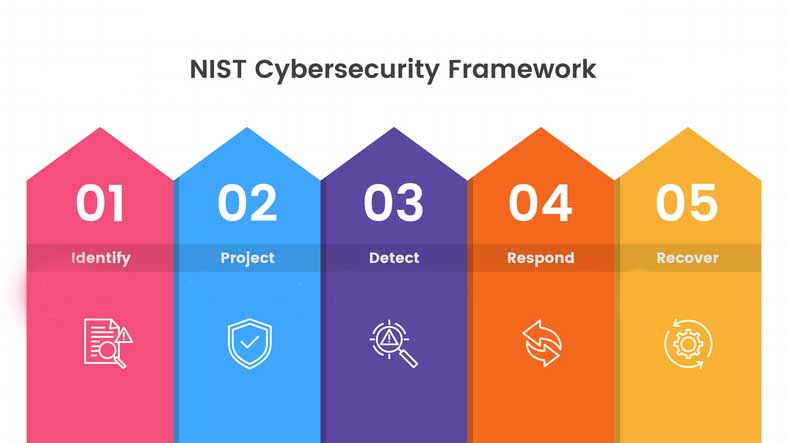
Previously, the framework focused on Identify, Protect, Detect, Respond, and Recover.
Now, Govern sits at the top, emphasizing that cybersecurity starts with leadership, policies, and decision-making.
This means security is no longer just about tools or technical controls. It’s about how the business manages risk at a strategic level.
For SMBs, this is actually a good thing. It encourages clearer ownership and accountability instead of ad hoc security decisions.
Cybersecurity Is Now a Company-Wide Responsibility
Another key shift in NIST 2.0 is the idea that cybersecurity is not just an IT problem.
In many businesses, security used to be something the IT person handled quietly in the background.
Now, NIST emphasizes involvement from leadership, operations, HR, and even finance teams.
Why?
Because risks don’t just come from systems. They come from people, processes, and decisions.
This aligns closely with how businesses are encouraged to build a security program that aligns with NIST, where security becomes part of everyday operations.
Better Guidance for Smaller Businesses
One of the most practical improvements in NIST 2.0 is its increased focus on usability.
The updated framework includes clearer guidance for organizations that don’t have large security teams.
This means SMBs can adopt NIST without feeling like they need enterprise-level resources.
The framework also allows businesses to scale their efforts based on risk rather than trying to implement everything at once.
 More Flexibility in Implementation
NIST 2.0 continues to emphasize flexibility, but it takes it a step further.
Businesses are encouraged to adapt the framework to their specific needs instead of following it rigidly.
This is particularly useful when mapping NIST controls to real-world SMB environments, where budget, tools, and workflows can vary widely.
The goal is to improve security outcomes, not to check boxes.
Improved Risk Management Focus
Risk management is now more clearly defined in the updated framework.
Instead of treating risk as a one-time assessment, NIST 2.0 promotes continuous evaluation.
This means regularly reviewing systems, identifying new threats, and adjusting controls accordingly.
For SMBs, this helps avoid the “set it and forget it” trap that often leads to outdated security practices.
Integration with Modern Technologies
Businesses today rely heavily on cloud platforms, remote work setups, and third-party tools.
NIST 2.0 reflects this reality by providing better alignment with modern technology environments.
This makes it easier for organizations to apply the framework to real-world scenarios without forcing outdated approaches.
It also complements strategies discussed in email security for regulated industries, where modern communication tools require stronger protections.
What Didn’t Change (And Why That’s Good) 
While there are updates, the core structure of NIST remains familiar.
The original five functions are still there and still relevant.
This means businesses that already started using NIST don’t need to start from scratch.
Instead, they can build on what they already have and incorporate the new elements gradually.
Common Misunderstandings About NIST 2.0
Some businesses assume that the update means they need to completely overhaul their security program.
That’s not the case.
NIST 2.0 is more of an evolution than a replacement.
Another misconception is that the new Govern function adds complexity.
In reality, it simplifies decision-making by clarifying roles and responsibilities.